Stop Buying Grocery Store Herbs and Get a Counter Herb Grower
Stop Throwing Money Away on Grocery Store Herbs
A counter herb grower is a compact indoor gardening system that sits on your kitchen counter and lets you grow fresh herbs year-round — no outdoor space, no gardening experience, and no wasted bundles of wilted basil required.
Quick answer — the top counter herb growers in April 2026:
| Model | Pods | Best For | Price Range |
|---|---|---|---|
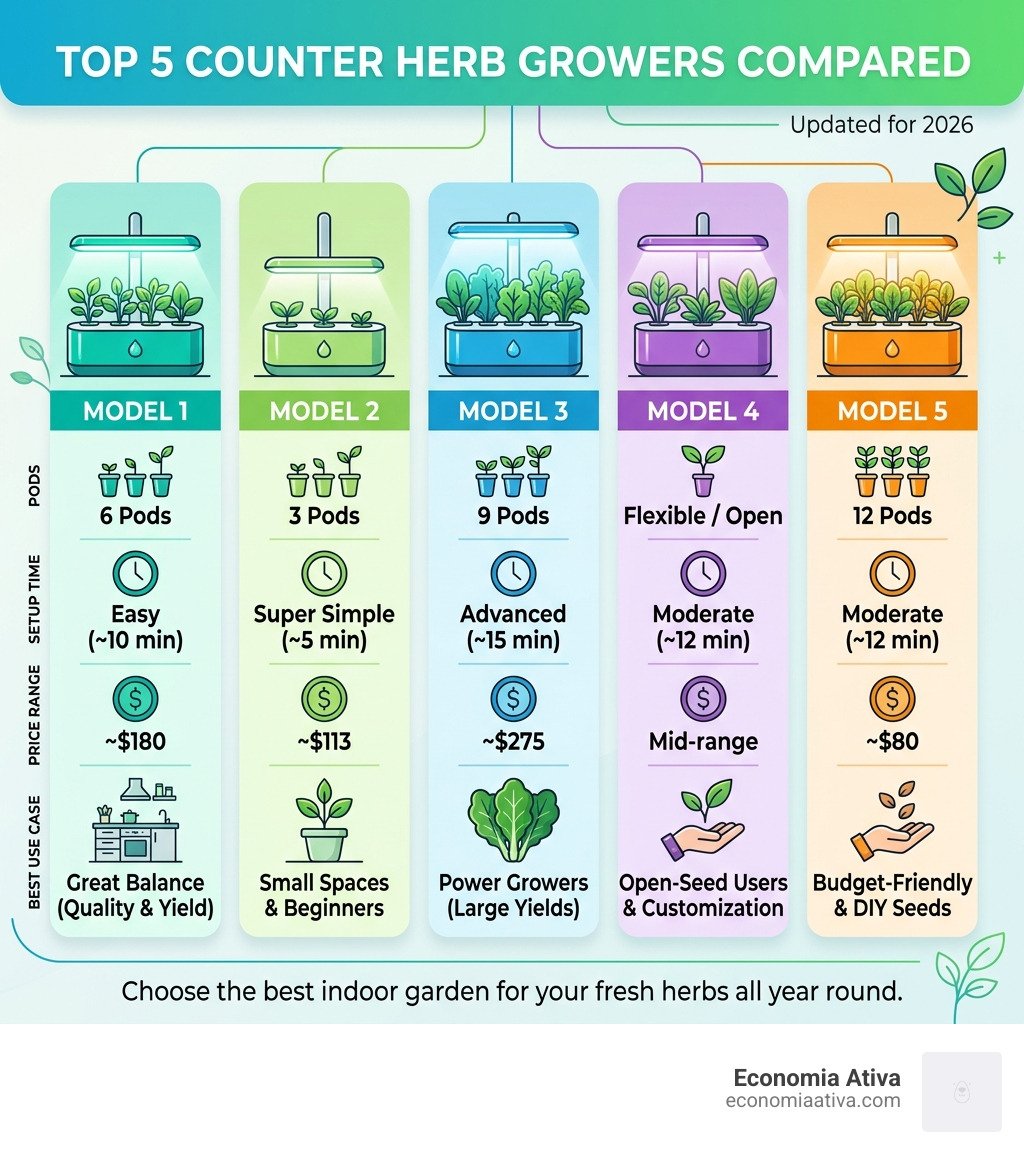
| AeroGarden Harvest Elite | 6 | Best overall | ~$180 |
| Click & Grow Smart Garden 3 | 3 | Small spaces / beginners | ~$113 |
| AeroGarden Bounty Elite | 9 | Power growers | ~$275 |
| Auk Mini | Flexible | Open-seed users | Mid-range |
| iDoo 12-Pod Kit | 12 | Budget / DIY seeds | ~$80 |
These systems use built-in grow lights and either hydroponic water reservoirs or smart soil pods to keep your herbs alive and thriving — without you having to remember to water them every day.
Think about the last time you bought a bunch of fresh herbs at the grocery store. You used two sprigs, stuffed the rest in the fridge, and threw them out a week later. That cycle is expensive. Growing your own herbs on the counter cuts that waste entirely — and the plants are ready to harvest in as little as two to three weeks.
The best part? Most systems take under 10 minutes to set up. No dirt. No mess. No gardening skills needed.
Understanding the Technology of a Counter Herb Grower
If you have ever struggled to keep a potted mint plant alive on a windowsill, you are not alone. Traditional indoor gardening is tricky because our homes often lack the consistent light and humidity that herbs crave. A modern counter herb grower solves this by automating the environment.
Hydroponics vs. Soil-Based Systems
Most systems on the market today fall into two categories: hydroponic and soil-based (often called “smart soil”).
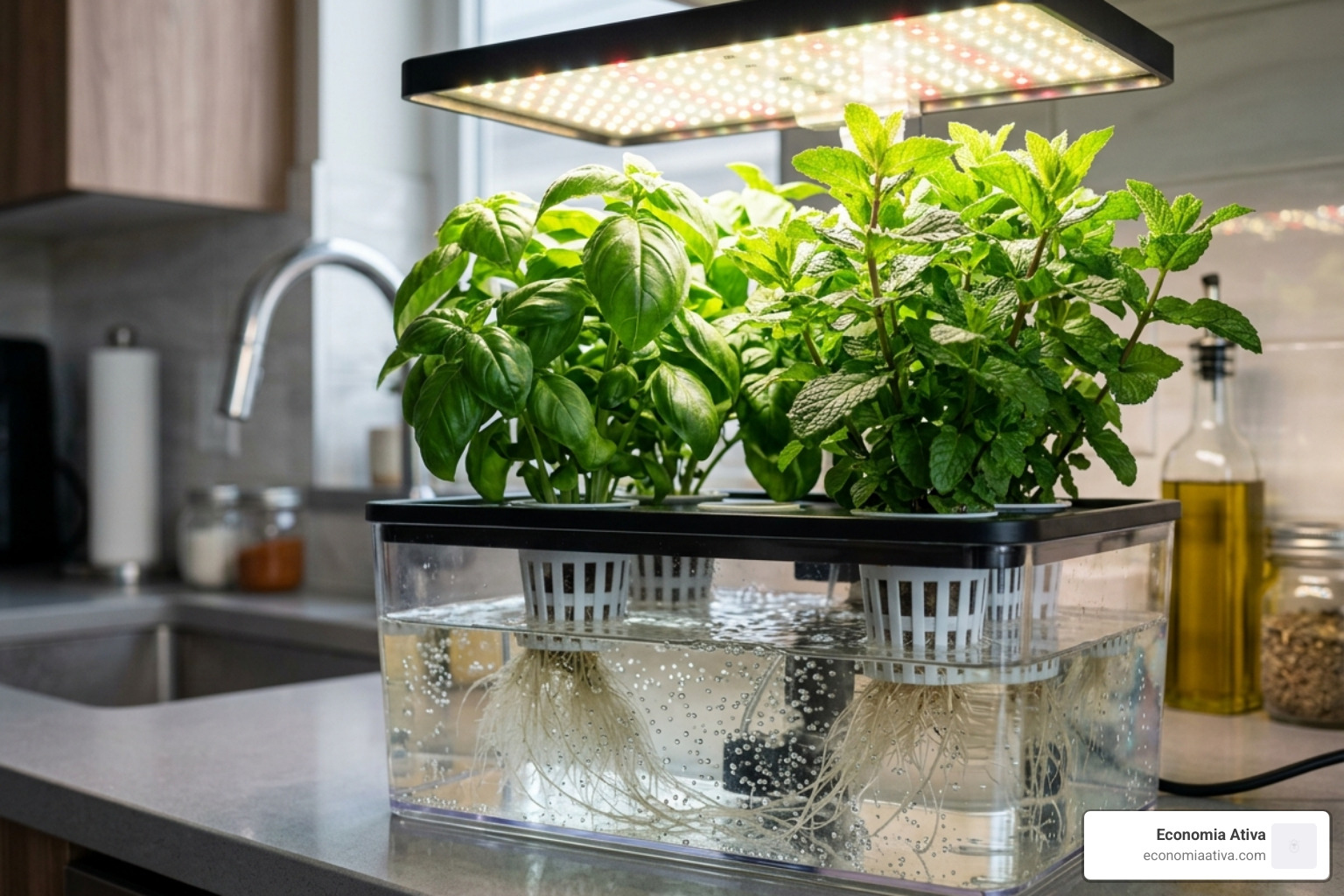
Hydroponic systems, like the AeroGarden series, grow plants directly in water. There is no dirt involved. Instead, the plant roots sit in a nutrient-rich water bath that is constantly oxygenated. This “oxygen-rich environment” is key; it allows the roots to absorb nutrients much more efficiently than they would in traditional dirt.
On the other hand, systems like the Click & Grow use a proprietary “smart soil.” This material is inspired by NASA technology and acts as a conduit for water and oxygen, maintaining the perfect pH level without any effort from you. Both methods are designed to be “clean and sustainable,” often surpassing the quality of store-bought organic produce because you control exactly what goes into the water.
The Power of the LED Spectrum
The “secret sauce” of any counter herb grower is the LED light hood. These are not your average lightbulbs. They provide a full spectrum of light that mimics natural sunlight. Some systems even use specialized colored lights—reds for fruiting and blues for leafy growth—to accelerate the process. In fact, advanced units like the Auk Mini can lead to up to 5x faster growth compared to traditional outdoor methods.
Root Geometry and Oxygen
We often focus on the leaves, but the magic happens underground (or underwater). Expert systems utilize unique geometry in their pots to ensure roots have plenty of room to breathe. When roots have access to high levels of oxygen and consistent nutrients, the plant doesn’t have to “work” as hard to survive, which is why your basil might be ready for harvest in just three weeks instead of the usual five. For those interested in the deeper science of herb varieties, Jekka’s offers extensive insights into how different culinary herbs respond to these controlled environments.
Top Features to Compare in Your Next System
When we are looking to invest in a counter herb grower, it is easy to get distracted by sleek designs. However, for a thriving financial life, we want a system that provides the best return on investment. Here is what we look for:
| Feature | Why It Matters | What to Look For |
|---|---|---|
| Pod Capacity | Determines how much you can grow at once. | 3 pods for singles; 6-9 for families. |
| Light Height | As plants grow, they need space. | Look for a neck that extends at least 12-24 inches. |
| Water Indicators | Prevents the “oops, I forgot” moment. | Digital displays or flashing LED reminders. |
| Seed Flexibility | Ongoing costs. | Systems that allow you to use your own seeds are cheaper long-term. |
| Germination Guarantee | Peace of mind. | Brands that offer a “sprouting guarantee” replace failed pods for free. |
Adjustable Height and Full Spectrum LEDs
One of the most common mistakes beginners make is choosing a system with a fixed light height. Herbs like dill and basil can grow surprisingly tall. If the light doesn’t move up, the leaves will eventually touch the hot LEDs and burn. Look for a model with an adjustable arm that can grow alongside your plants.
Furthermore, the spectrum matters. A “full spectrum” LED ensures that whether you are growing parsley or mini tomatoes, the plant is getting the specific wavelengths it needs for every stage of life. If you’re looking for more inspiration on how to use these herbs once they’ve grown, you can explore expert herb growing experiences to see how professionals manage their yields.
Finding the Best Counter Herb Grower for Small Spaces
Not everyone has a massive kitchen island. If you are working with limited real estate, the Click & Grow Smart Garden 3 is a fantastic entry point. It features a slim footprint and a clean, Scandinavian design that fits perfectly on a bookshelf or a small corner of the counter.
For those who appreciate high-quality materials, the Auk Mini is another standout. It utilizes Scandinavian aluminum and American timber, making it as much a piece of decor as it is a garden. These smaller systems typically hold three pods, which is plenty for a steady supply of fresh tea or garnishes. You can find more details on these specific design features at Jekka’s.
Smart Features to Look for in a Counter Herb Grower
In April 2026, “set it and forget it” is the gold standard. The best systems now include:
- App Connectivity: Many models (like the EDN SmallGarden) connect to your smartphone to send notifications when it is time to add water or nutrients.
- Vacation Mode: This is a lifesaver. It slows down the growth of your plants and reduces water consumption so your garden doesn’t die while you are away for a week.
- Automated Light Cycles: Most herbs thrive on an 18-hour “on” and 6-hour “off” cycle. The best growers handle this automatically, so you don’t have to flip a switch.
Setup, Maintenance, and Harvesting Your Indoor Garden
We love these systems because they are built for people who claim to have a “black thumb.” Most units are what we call “zero learning curve” devices.
The 10-Minute Setup
Setting up a counter herb grower is simpler than assembling a piece of flat-pack furniture.
- Unbox and Assemble: Usually involves clicking the light hood into the base.
- Insert Pods: Drop in the pre-seeded pods or add your own seeds to the reusable baskets.
- Add Water and Nutrients: Fill the reservoir to the “max” line and add the provided liquid plant food.
- Plug it in: The lights will turn on, and the timer starts.
Maintenance and Cleaning
Maintenance is minimal. Depending on the model, you will likely only need to refill water and nutrients every 9 to 15 days. However, we recommend a deep clean of the reservoir every month or two. This prevents algae buildup and keeps the pump (if your system has one) running smoothly.
Pruning is the other vital task. To keep your plants from becoming “leggy,” you should pinch off the tops once they reach a few inches in height. This encourages the plant to grow outward rather than just upward, resulting in a bushier, more productive harvest. For more hands-on advice, the Traveling Herb Farmer provides great tips on maintaining plant health in various environments.

The Financial and Health Benefits of Growing at Home
At Economia Ativa, we are all about practical tips for a thriving financial life. A counter herb grower is a perfect example of a lifestyle upgrade that pays for itself.
The Return on Investment (ROI)
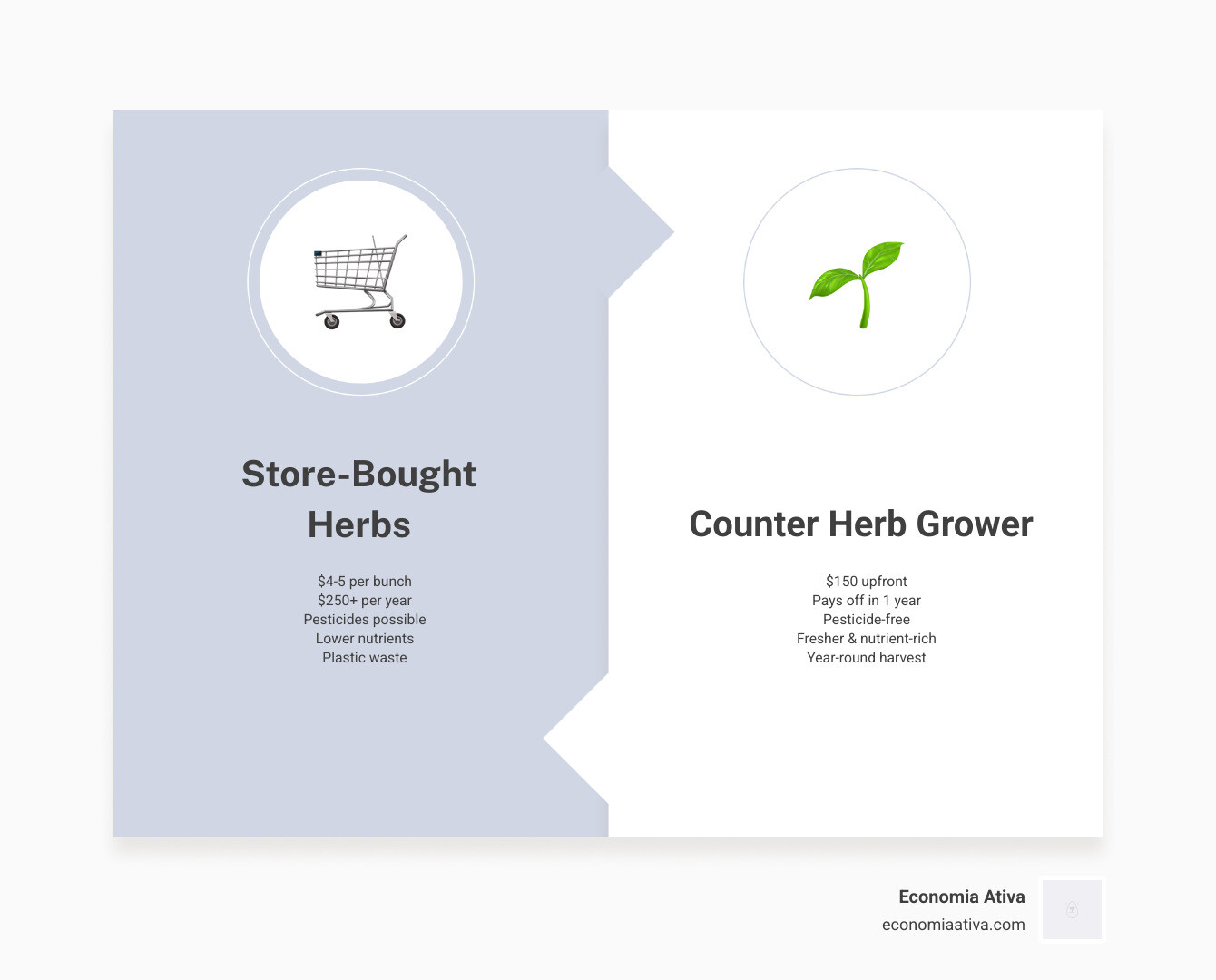
A single bunch of organic basil at the store can cost $4 or $5. If you buy one bunch a week, you’re spending over $250 a year. A mid-range counter herb grower costs about $150 and can produce that same amount of basil (and more) for the cost of a few cents in electricity and a $2 seed pod. Within the first year, the system has already paid for itself.
Health and Sustainability
Beyond the money, there is the health factor. When you grow your own, you know exactly what is—and isn’t—on your food. There are no pesticides, no long-haul shipping emissions, and no plastic packaging. Plus, fresh herbs are packed with more nutrients than those that have been sitting in a refrigerated truck for three days.
As Jim Long of Long Creek Herbs suggests, plants should “pay rent” by providing something back, whether it’s food or beauty. By creating an “edible landscape” on your kitchen counter, you are making your home more functional and sustainable. Even if you start small, as Debbie Blount suggests with simple potted herb gardening, the transition to an automated countertop system is the logical next step for the modern, busy household.
Frequently Asked Questions about Countertop Herb Gardens
Which herbs grow fastest in a countertop system?
Basil is the undisputed king of the counter herb grower. In some systems, it can germinate in just one week and be ready for your first harvest in three weeks. Other fast growers include mint, dill, and parsley. Woody herbs like rosemary and thyme take a bit longer to get established but are very hardy once they start.
Do I need to buy special seed pods or can I use my own seeds?
It depends on the system. Brands like Click & Grow and AeroGarden sell pre-seeded pods which are incredibly convenient. However, many users prefer “open systems” or buy “grow anything” kits that allow you to use your own seeds. This is often more cost-effective if you have a specific heirloom variety you want to grow.
How much electricity do the grow lights consume?
Surprisingly little! Most modern LED hoods use between 10 and 30 watts. Even running for 18 hours a day, the cost is typically less than $1 to $2 per month on your electric bill. This is a small price to pay for a year-round supply of fresh produce.
Conclusion
Switching to a counter herb grower is one of those rare “win-win” situations. You get to enjoy the superior taste and nutrition of freshly harvested herbs, you reduce your environmental footprint, and you keep more money in your pocket by avoiding those overpriced grocery store bundles.
At Economia Ativa, we believe that a sustainable lifestyle and a healthy bank account go hand-in-hand. Whether you choose a high-tech hydroponic system or a sleek soil-based garden, you are taking a proactive step toward a more self-sufficient kitchen. So, stop throwing away wilted greens and start your own indoor garden today. For more tips on living a thriving, financially savvy life, visit us at Economia Ativa.