
The Only Begonia Care Tips You Will Ever Need
The Begonia Care Tips Every Plant Lover Needs to Know
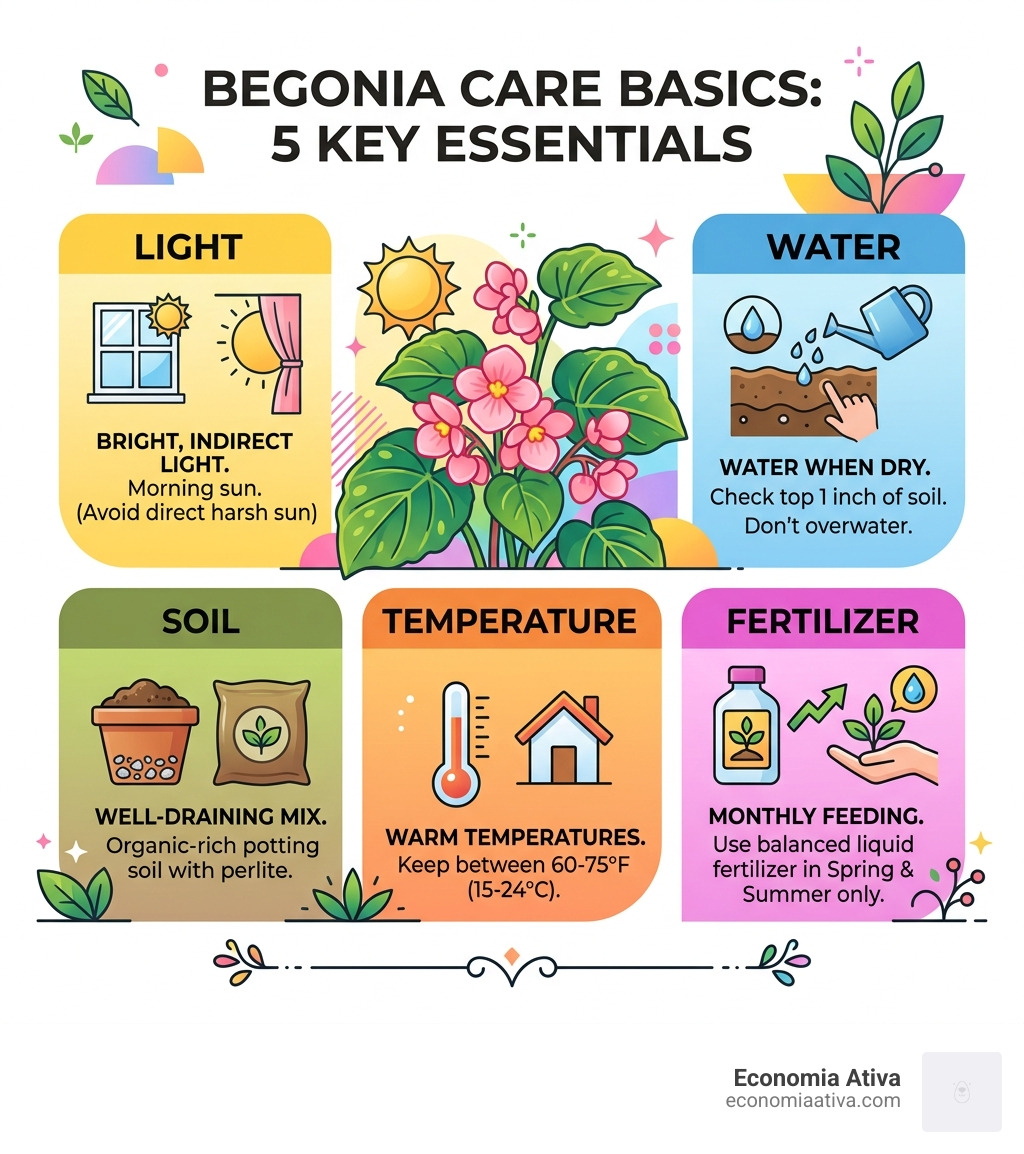
Begonia care tips come down to a handful of simple rules that make a big difference. Here is a quick overview so you can get started right away:
- Light: Bright, indirect light indoors; morning sun with afternoon shade outdoors
- Water: Water when the top inch of soil is dry; never let roots sit in soggy soil
- Soil: Well-draining, organic-rich potting mix
- Temperature: Keep between 60-75°F (15-24°C) indoors
- Humidity: Use a pebble tray or humidifier; avoid misting leaves
- Fertilizer: Feed once a month in spring and summer with a balanced fertilizer
- Repotting: Every one to two years, or when roots outgrow the pot
With over 2,000 species and countless hybrids, begonias are one of the most diverse flowering plant families on the planet. They come in every shape, size, and color imaginable — from bold, silver-splashed rex begonias grown purely for their striking foliage, to cheerful wax begonias that bloom nonstop from spring to frost.
Originally from tropical and subtropical regions of Central and South America, Africa, and Asia, begonias evolved on the shaded floors of warm, humid rainforests. That origin story explains almost everything about how to keep them happy at home.
The good news? Despite their exotic roots, begonias are surprisingly forgiving plants. They adapt well to indoor environments, they tolerate a range of light conditions, and some varieties — like the angel wing begonia — even help filter indoor air. That makes them a smart, budget-friendly choice for anyone wanting more greenery at home without a lot of fuss.
Whether you are growing them on a windowsill in a small apartment or massing them in a shaded garden bed, the care fundamentals are the same. This guide covers everything you need to know.
Understanding Begonia Types and Companion Planting
Before we dive into the nitty-gritty of begonia care tips, we need to know which begonia we are talking about. Because there are over 2,000 species, botanists and gardeners usually group them by their root systems. This is not just “science talk”—knowing the root type tells us exactly how the plant wants to be watered and fed.
| Begonia Type | Key Characteristics | Best Use | Root System |
|---|---|---|---|
| Wax Begonia | Tough, waxy leaves; constant small flowers. | Garden bedding, borders, full sun (some). | Fibrous |
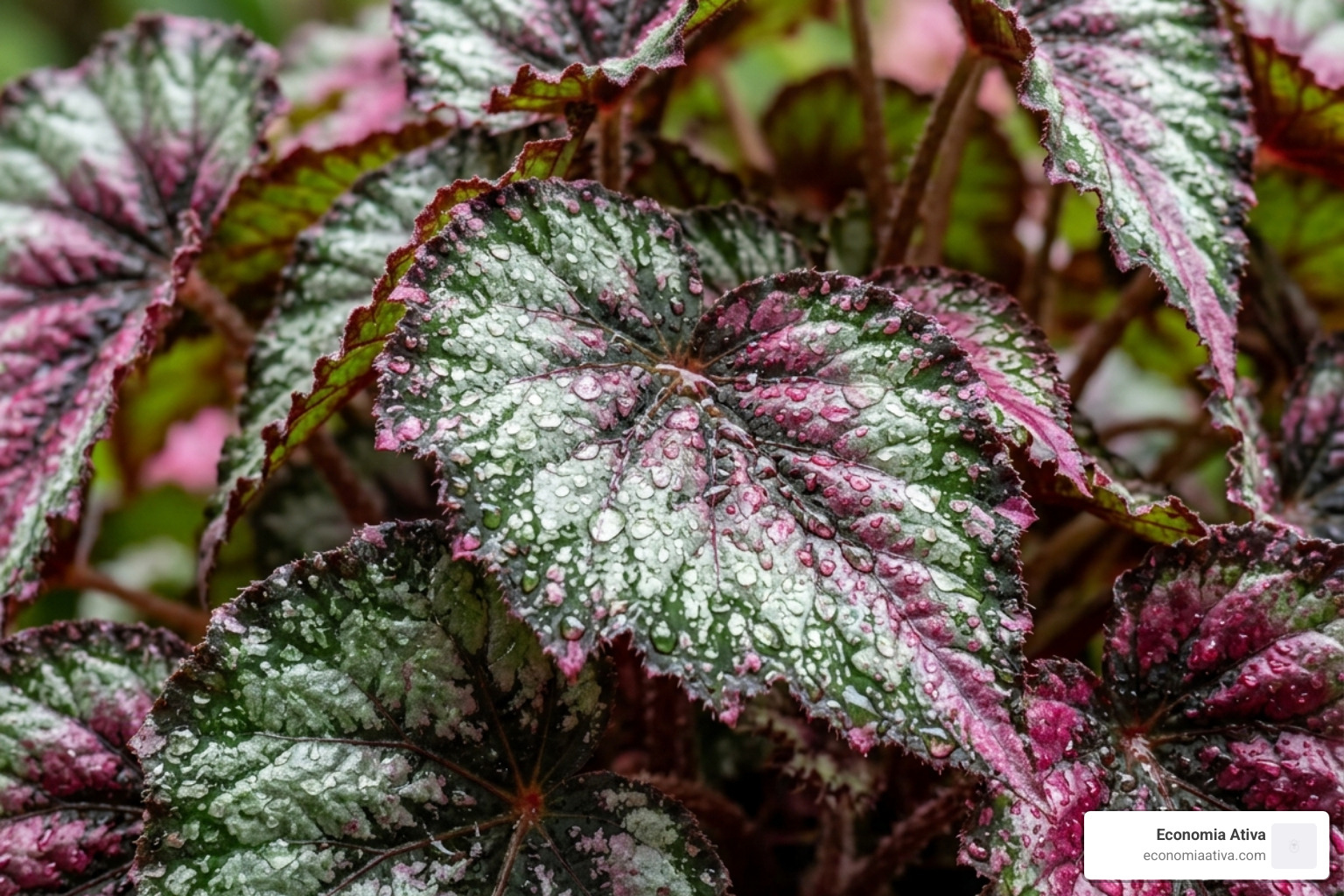
| Rex Begonia | Incredible foliage patterns; swirls of silver, purple, and pink. | Houseplants, terrariums, shade pots. | Rhizomatous |
| Tuberous Begonia | Massive, rose-like blooms; spectacular colors. | Hanging baskets, window boxes. | Tuberous |
| Cane Begonia | Tall, bamboo-like stems; “Angel Wing” leaf shape. | Indoor specimens, large floor plants. | Fibrous |
Most begonias we see in April 2026 are either fibrous-rooted (like the common wax begonia), rhizomatous (like the Rex), or tuberous. Rhizomatous types grow from a thick, fleshy horizontal stem called a rhizome that sits just at or below the soil surface. These are the ones famous for their foliage patterns.
If you are looking for something truly special, keep an eye out for the Begonia Ginny Galaxy. Its pink variegated leaves look like a nebula trapped in a pot! For more detailed variety breakdowns, you can check out How to Grow and Care for Begonias.
Selecting the Right Variety for Your Space
When we pick out a new plant, we have to consider its mature size. Begonias are versatile; they can stay a dainty 6 inches tall or grow into 3-foot shrubs.
- For Small Windowsills: Look for Rex hybrids or “Mandalay Pearl.” They stay compact (6-12 inches) and provide year-round color without needing flowers.
- For Hanging Baskets: Tuberous and trailing varieties like Begonia boliviensis are perfect. Their stems cascade beautifully, often reaching 12-24 inches in length.
- For Garden Beds: Wax begonias are the “gold standard.” They are sturdy, tolerate more sun than their cousins, and fill in gaps quickly.
Best Companion Plants for Begonias
Begonias are team players. In a garden or a large mixed container, they thrive when paired with plants that share their love for dappled shade and moist soil. Here are some of our favorite neighbors for begonias:
- Impatiens: The classic pairing. They love the same shade levels and provide a different flower texture.
- Ferns: The delicate, airy fronds of a fern provide a stunning backdrop for the bold, heavy leaves of a Rex or Cane begonia.
- Coleus: If you want a “foliage explosion,” mix Rex begonias with Coleus. The color combinations are endless.
- Hostas: Great for garden borders; the large Hosta leaves protect the smaller begonias from wind.
- Caladium: These share the tropical vibe and like the same high-humidity environments.
- Lobelia: Use trailing blue Lobelia to spill over the edges of a pot containing upright begonias.
Essential Begonia Care Tips for Indoor and Outdoor Success
Whether your begonia is sitting on your desk or decorating your porch in April 2026, there are a few environmental “must-haves.”
Most begonias prefer a temperature range of 60-75°F (15-24°C). If you are comfortable in a light t-shirt, your begonia probably is, too. Outdoors, they are generally hardy in USDA Zones 9-11. However, some “Hardy Begonias” (Begonia grandis) can survive down to Zone 6 if they are heavily mulched.
When planting outdoors, spacing is key. Smaller bedding types need about 6-8 inches of breathing room, while larger varieties should be spaced 12-15 inches apart. Good air circulation is our best defense against the “big bad” of the begonia world: powdery mildew.
Light and Soil: Foundational Begonia Care Tips
Light is where most people get tripped up. While we often hear begonias are “shade plants,” they actually love light—just not the “skin-scorching” kind.
Indoor Light: Place them near an east-facing window where they get bright, indirect light. If they are in a south-facing window, use a sheer curtain to filter the rays. Too little light, and your plant will become “leggy” (stretched out) and stop blooming.
Outdoor Light: Morning sun is great, but they need protection from the harsh afternoon sun. If the leaves start to look bleached or develop crispy brown spots, they are likely getting scorched.
The Soil Secret: Begonias hate “wet feet.” We need a soil mix that is light, fluffy, and well-draining. A high-quality soilless potting mix with plenty of organic matter (like compost or coco coir) and perlite is ideal. They prefer a neutral to slightly acidic pH (5.5 to 6.5). For a deep dive into soil prep, Begonias: How to Care for Begonia Plants | The Old Farmer’s Almanac offers excellent guidance.
Watering and Humidity: Critical Begonia Care Tips
Watering begonias is a bit of a balancing act. Many begonias have succulent-like stems that store water, meaning they can handle a little bit of neglect better than a total flood.
The Finger Test: Don’t water on a schedule. Stick your finger in the soil. If the top 1-2 inches (or about 50-75% of the soil volume) is dry, it’s time for a drink.
Watering Best Practices:
- Avoid the Leaves: Try to water at the base of the plant. Wet leaves are an invitation for fungal diseases.
- Drainage is Non-Negotiable: Always use a pot with drainage holes. If you have a decorative “cache pot” with no holes, take the inner plastic pot to the sink, water it, let it drain completely, and then put it back.
- Bottom Watering: This is a great technique for begonias. Sit the pot in a saucer of water for 15-20 minutes and let it soak up what it needs.
Humidity: Begonias love humidity (around 50%), but they hate being misted. Misting creates a damp environment on the leaf surface where powdery mildew thrives. Instead, use a pebble tray: fill a shallow tray with pebbles and water, then set your plant pot on top (ensuring the bottom of the pot isn’t touching the water). As the water evaporates, it creates a “micro-climate” of humidity right where the plant needs it.
Advanced Maintenance: Fertilizing, Pruning, and Propagation
Now that we have the basics down, let’s talk about how to make your begonias truly spectacular. Maintenance isn’t just about keeping the plant alive; it’s about encouraging those massive blooms and lush leaves we all love.
Feeding for Profuse Blooms
Begonias are “hungry” plants during their active growth phase. In April 2026, as the days get longer, your plants will start waking up and demanding more nutrients.
- The Schedule: Feed once a month during spring and summer.
- The Fertilizer: Use a balanced, water-soluble fertilizer (like a 10-10-10) diluted to half-strength.
- The Phosphorus Boost: If you have a flowering variety (like Tuberous or Wax) and want more blooms, switch to a fertilizer with a higher middle number (phosphorus). Some experts even swear by a little bone meal mixed into the soil at planting time to give those flowers a kickstart.
- Winter Break: Stop fertilizing in late autumn. Most begonias go into a semi-dormant state during winter and won’t be able to use the extra nutrients, which can lead to salt buildup in the soil.
Propagation Techniques for Every Gardener
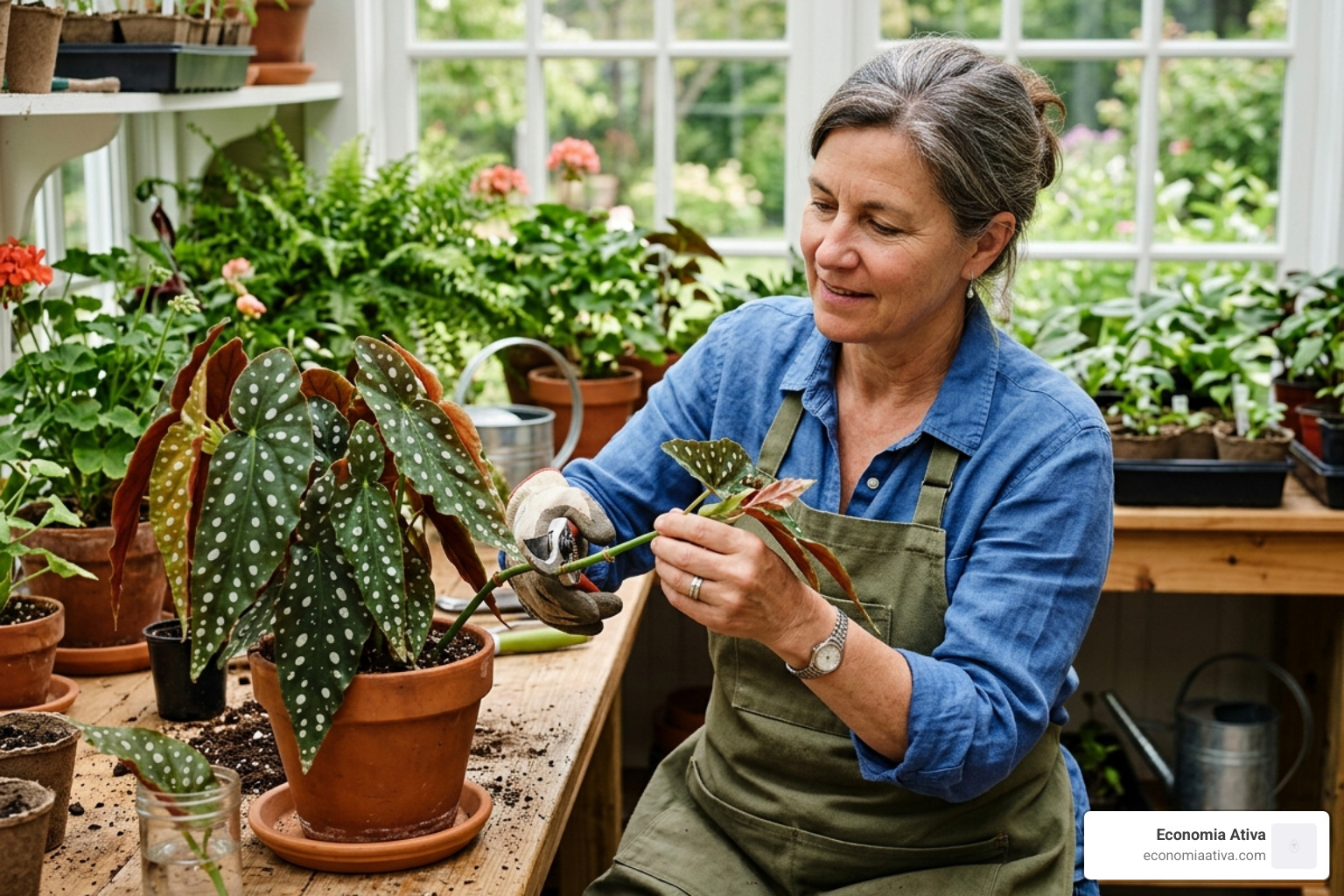
One of the most rewarding things about begonias is how easy they are to “clone.” You can turn one plant into ten with just a little patience.
- Stem Cuttings: This works best for Cane and Fibrous begonias.
- Cut a stem about 7-10cm (3-4 inches) long, making sure it has at least one “node” (the bump where a leaf grows).
- Remove the bottom leaves.
- Place the cutting in a glass of water or directly into moist potting soil.
- Keep it in a warm spot (18-21°C) with bright, indirect light. Roots usually appear in 3-4 weeks.
- Leaf Cuttings: This is the “magic” trick for Rex and rhizomatous begonias.
- Take a healthy leaf and cut it into squares or wedges, ensuring each piece has a main vein.
- Lay the pieces flat on top of moist seed-starting mix.
- Pin them down so the vein touches the soil.
- Cover the tray with plastic wrap to keep humidity high and keep it at 18-24°C (64-75°F). Soon, tiny “baby” begonias will sprout from the leaf veins!
- Rhizome Division: For older, crowded rhizomatous begonias, you can simply slice the “log-like” rhizome into sections (each with a few leaves and roots) and repot them individually.
Troubleshooting Pests, Diseases, and Winter Care
Even with the best begonia care tips, problems can occasionally pop up. The key is to catch them early.
- Powdery Mildew: This looks like a dusting of white flour on the leaves. It usually happens when humidity is high but air circulation is low. Treat it by improving ventilation and using a neem oil spray or a mixture of baking soda and water.
- Mealybugs: These look like tiny bits of white cotton hidden in the “armpits” of the leaves. Dab them with a cotton swab dipped in rubbing alcohol to kill them on contact.
- Spider Mites: If you see tiny webs or the leaves look “stippled” and yellow, you might have mites. They love dry air, so increasing humidity is your first line of defense.
- Root Rot: If your plant is wilting even though the soil is wet, the roots have likely rotted. This is caused by overwatering. You can try to save it by repotting into fresh, dry soil and cutting away any mushy, black roots.
Toxicity and Safety Precautions
We love our pets, and we love our plants, but sometimes they don’t mix. Begonias contain calcium oxalates, which are microscopic, needle-shaped crystals.
If a cat or dog chews on a begonia, these crystals can cause intense oral irritation, excessive salivation (drooling), and vomiting. The roots are the most toxic part of the plant. While rarely fatal, it is definitely an unpleasant experience for your furry friends. We recommend keeping begonias on high shelves or in hanging baskets if you have curious pets.
Overwintering and Perennial Status
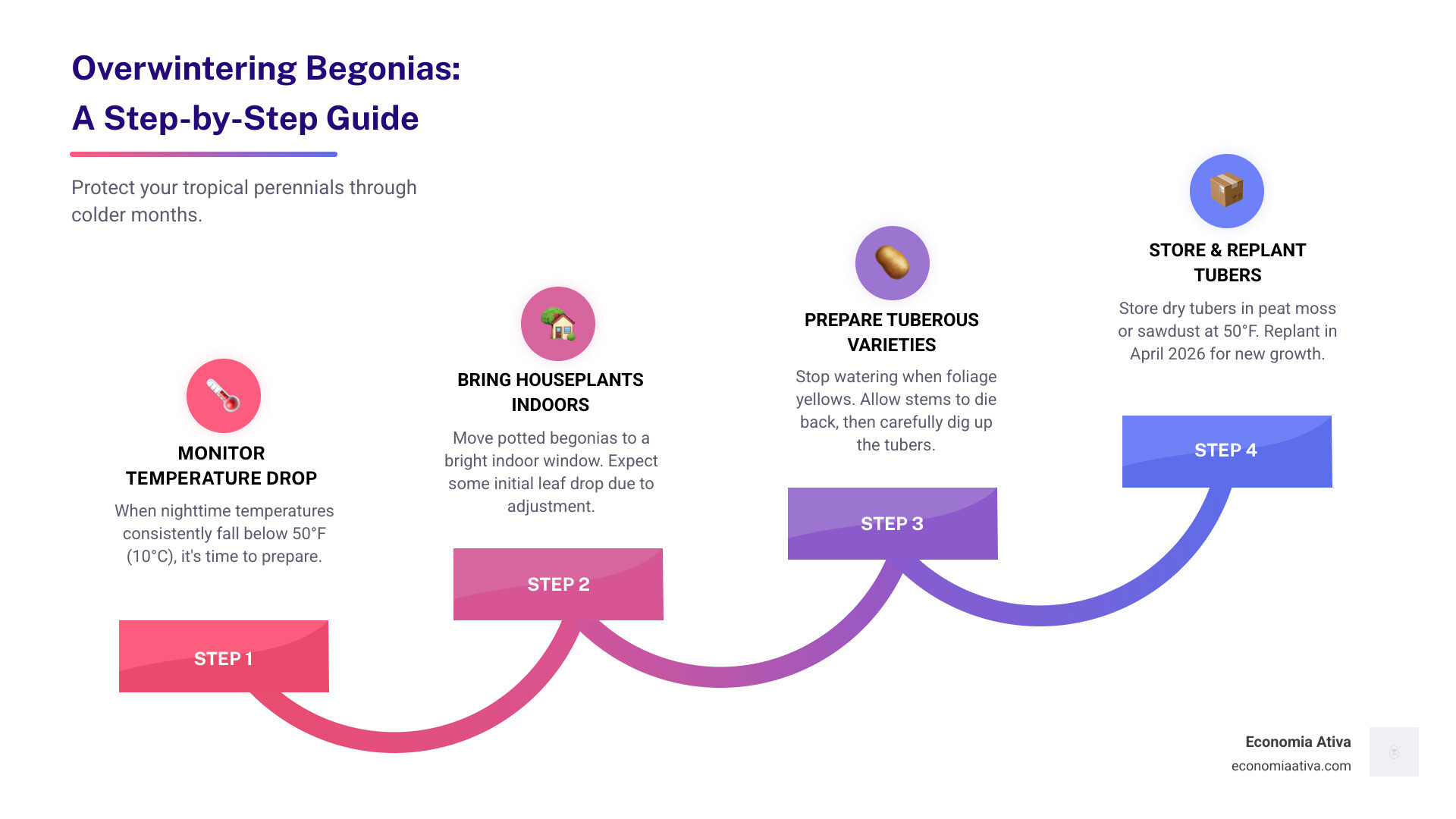
Are begonias perennials? Technically, yes! They are tropical perennials, meaning they live for many years in their native homes. However, in most of the world, we treat them as annuals because they cannot survive a freeze.
The 50°F Rule: When nighttime temperatures consistently drop below 50°F (10°C), it’s time to act.
- Houseplants: Bring your pots inside and place them in a bright window. They may drop a few leaves as they adjust to the lower indoor humidity.
- Tuberous Begonias: These need a “sleep.” When the foliage starts to yellow in autumn, stop watering. Let the stems die back, then dig up the tubers. Shake off the dirt and store them in a box of dry peat moss or sawdust in a cool, dark place (around 50°F). In April 2026, you can bring them back out and start watering again to wake them up.
Frequently Asked Questions about Begonia Care Tips
Are begonias perennials or annuals? They are tropical perennials. In warm climates (Zones 9-11), they stay green all year. In colder climates, they are treated as annuals unless brought indoors for the winter.
How can I encourage more flowers? Light is the biggest factor—make sure they get plenty of bright, indirect sun. Also, use a high-phosphorus fertilizer and “deadhead” (pinch off) faded flowers to tell the plant to keep producing new ones.
Why are my begonia leaves turning brown? If the edges are crispy, the humidity is likely too low or the plant is getting too much direct sun. If the whole leaf is turning brown and mushy, you are probably overwatering.
Conclusion
Mastering begonia care tips is a journey that rewards you with some of the most stunning colors and patterns in the plant kingdom. From the “indefatigable” blooms of the wax begonia to the cosmic swirls of the Rex, these plants offer a level of diversity that few other species can match.
At Economia Ativa, we believe that a thriving lifestyle starts with the small things—like the air quality in your home and the joy of a successful DIY garden project. Sustainable gardening isn’t just about plants; it’s about creating a space that nurtures your mental and financial wellness. By choosing versatile, easy-to-propagate plants like begonias, you are making a smart investment in your home’s environment.
Ready to grow your knowledge even further? Check out More info about lifestyle services for more actionable tips on living your best, most active life. Happy planting!
